Monthly Archives: April 2010
By definition, criminals operate “out from under authority.” And they’re constantly trying to get the police to step out there with them. They will push every button you’ve got until they get you to react to them out of your own pride and ego. And once you step out into their territory, they’ve got you right where they want you.
It’s the classic challenge to a police officer’s authority. You’ve all heard it. It goes something like this: “You wouldn’t be so tough if you took that badge off!” Regretfully, some officers will figuratively take their badge off and answer the challenge. A few of them will literally take their badge off and engage the criminal at their level.
To resist this challenge, remember what you represent: the law, the Constitution, the agency, your Chief or Sheriff, the standards of the police profession. Ultimately, you represent the people. The one thing you don’t represent is yourself. And the minute you think that you are out there to represent your goals, your agenda, and your ego, is the minute you set yourself up for a major ethical failure. This is the fundamental teaching of the Dynamic of Authority, the cornerstone of the Police Dynamics program. Watch this video on the Independent Spirit for more information.
Operating under authority is essential to building trust and accomplishing the police mission. It means: if the criminal is pushing your buttons, make sure you don’t have any buttons without “button covers…!”
A friend of mine sent this powerful video by Tamara Lowe to me and I just had to share it with you. It’s about eternal truths and the influence of pop culture…
Chaplain Grant Wolf of the Chattanooga, TN Police Department is still working on his anthology of “stories of faith and courage” from law enforcement. He needs 45 more stories to complete the project and has asked for my help in getting the word out to readers of this blog. When it is finished, the book will feature 365 stories – one for each day of the year – about how God intervened in the life of a law enforcement official.
Stories received to date run the gamut from light-hearted (a rookie who passed out while helping deliver a baby) to not-for-the-faint of heart (a bank shooting and a fatal auto accident). They represent every phase of law enforcement work and demonstrate that something happened which simply cannot be explained other than by God’s hand.
If you have a suitable story, please download this link for a brochure explaining the law enforcement faith and courage project.
Most progressive disciplinary models used by law enforcement agencies use behavior-based standards. However, most of our problems stem from ethical failures. Discipline is not always negative. By definition, discipline is training designed to perfect moral character, not necessarily punish behavior.
In this video last video in the Polish the Tarnished Badge series, I use the Path of Destruction from the Dynamic of Restoration to illustrate a powerful principle. To incorporate a character-based dynamic into a progressive discipline model, let the nature of the offense determine the range of internal disciplinary options and let the character of the individual dictate which option is chosen.
This points us back to the leadership principle of knowing the condition of your flock. Without the foundation of internal trust-based relationships, this disciplinary model will not work…
The Character First Curriculum provides some excellent tools for promoting and encouraging character within any police organization. The Police Dynamics Institute has partnered with the Character Training Institute to provide a truly outstanding character-based leadership program for law enforcement.
The basic principle is that you should hire a police officer for character and then train them for skills. But in law enforcement management, we tend to hire for skills and fire for character because so many officers fail the character test!
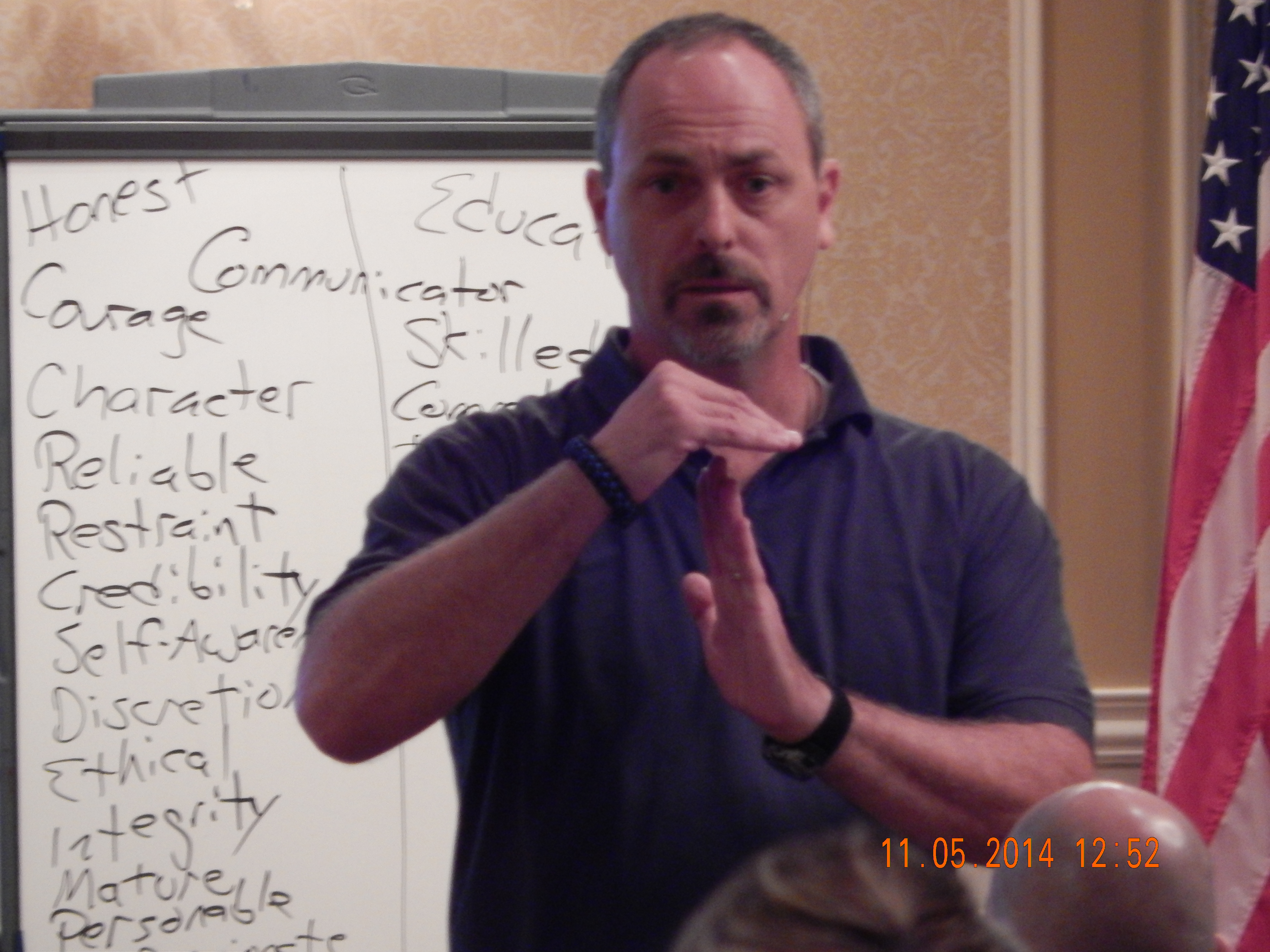
The key to impacting a culture is to impact its vocabulary. In this video, Franklin Smith shows you how to make the character connection on a day to day basis as well as how to pass the character tests that we all tend to face.
The Dynamic of Authority is the essential teaching to understanding the Police Dynamics training series and principles of character-based leadership. Here, I use it as a teaching paradigm to communicate how to model a standard of good character. If the leadership of an organization is not modeling good character as well as encouraging it, the whole process breaks down.
Understanding what the badge actually represents and the proper relationship between a police officer and his or her authorities is perhaps the most important teaching for law enforcement personnel and their leaders to grasp.
Sheriff Ray Nash